

Only saving is not enough to accumulate a corpus for your needs. Money lying in your safe or even saving account does not grow or get any interest on the contrary it is giving negative returns due to inflation.
Inflation is defined as a general increase in prices and fall in the purchasing value of money. In laymen term, you will not be able to get the same quantity /product at current prices in the future due to the price increase of products. Inflation is just not limited to physical goods but also affects services-health, education, etc.
So how to beat inflation and get a return more than the prevailing inflation rate? You need to invest your hard-earned money to let it grow in various investment options available. But Investing is not that much simple- various investing options come with their own risks like the risk of capital, risk of low interest on corpus, risk of liquidity, risk of default, etc. You need to learn at least three important factors that make an investment good or bad-namely Return, Risk & Liquidity. A high return giving investment option often comes with a large risk and demands close watch on how your investment is performing and when is the right time to exit or enter. Some safer options come with a lock-in period of specified time hence less liquidity.
Selection of investment product must be done with a proper understanding of the risk one is capable of taking, what duration one can give it to grow and whether one knows the complexities of that particular investment product.
Different types of Popular Investment Options :
Investment can be very basic like Bank FDs, Bank RDs, PPF, NSC, or similar products which give less return but considered as safe and without much complexities. These products can form the debt part of your portfolio. Understand the schemes with a lock-in period, past & current interest rate offered, and taxation of the products before investing in these. Even some savings banks account are offering interest rate on savings in the range of 5-6% per annum, one can consider them also to park their emergency fund.
Mutual funds (MFs) Investment:
Every now and then you have heard the TV commercial, read the newspaper advertisement about Mutual Fund campaigns, you must also hear/read that they are subjected to market risks. MFs are basically funds pooled by investor’s money and investing in different stocks of companies; bonds etc and look after by respective fund managers to generate a return on investor’s money. Basically, if you don’t have time & expertise to invest in direct equities/stock market you give you money to fund manager on small fees to get returns.
But note that MF investment comes with large risk and returns are not linear eg. You may get a 10% return one year while -10% in another.MF are further classified into various schemes debt, equity, hybrid, etc. One must read the nitty-gritty of schemes before investing and give sufficient long time to grow the money in these schemes.
Other investment :
These include Real-estate, Gold, Silver or other precious metal investment, etc.
Things to Remember before Investing:
1. Try to diversify your investment into different products according to your risk, liquidity needs for e.g. you can put some part into debt products like RDs, FDs, Flexible FDs, High Interest earning Saving account which you require in very near future and rest you can allocate to long term products like NSC, PPF, VPF, NPS, MFs, etc.
2. Try to map each investment with a goal so that you can monitor it easily i.e. when the goal is far you can take more risk and give more time money to grow and when the goal is nearer you can transfer the corpus from high-risk product to low risk and safe investment product.
3. Beware of agents, money managers, financial planners who lure investors to invest money in high-risk products without investor’s knowledge by assuring them of very high returns. Don’t get swayed by such offers always remember there are no such things as a free lunch, Always read and understand the schemes before investing and if in doubt consult the professional experts and clear every doubt before investing your hard-earned money.
4. Understand the risk Vs return ratio and fees you are paying for any investment product.
Get yourself one or two book dealing in Investment in Indian context, Some of popular books are listed below-
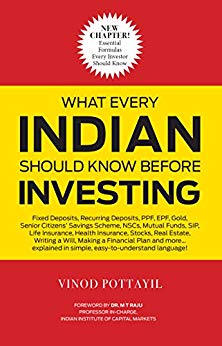
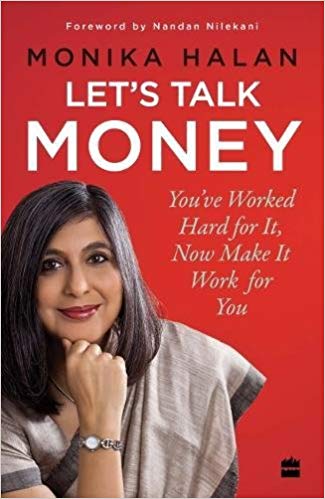
 FinWin
Your tips and steps are amazing. Thanks for sharing such useful information.
LikeLike